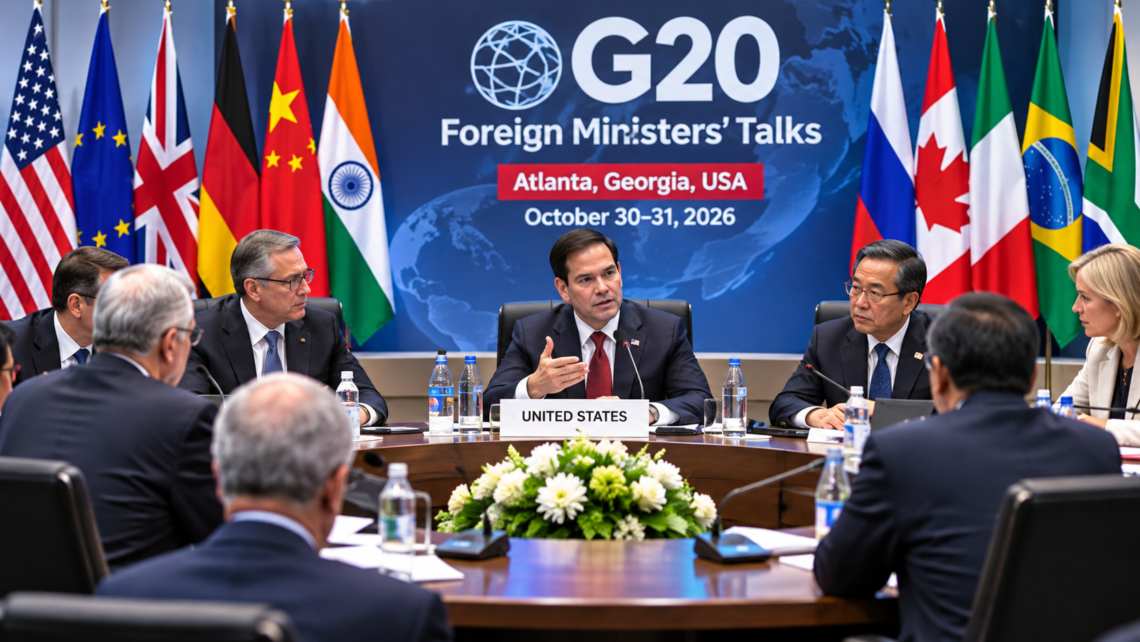
The G20 Foreign Ministers’ Talks are an important international diplomatic meeting bringing together representatives of the world’s leading economies to discuss major political, economic, and security challenges. The latest meeting was held on October 30–31, 2026, in Atlanta, Georgia, United States, under the US presidency of the G20. The discussions were led by US Secretary of State Marco Rubio and focused on issues affecting international peace, economic stability, and cooperation between major countries.
The meeting is particularly important because the world is facing several challenges, including the Russia-Ukraine war, tensions involving Iran, rising energy security concerns, and disruptions to international trade. These issues affect not only powerful economies but also developing countries that depend on global markets for fuel, food, and essential products. The talks provided an opportunity for world leaders to exchange views, discuss possible solutions, and explore ways to strengthen international cooperation.
What Are the G20 Foreign Ministers’ Talks?
The G20 Foreign Ministers’ Talks were held on October 30–31, 2026, in Atlanta, Georgia, under the United States’ G20 presidency. The meeting brought together foreign ministers from major economies to discuss important global issues, including economic stability, international security, and cooperation between countries.
The main topics included energy security, international trade, and supply chain protection. Ministers discussed the safety of important shipping routes, including the Strait of Hormuz and Bab el-Mandeb, as well as securing supplies of food, fertilisers, and critical minerals.
The meeting also focused on international conflicts, particularly the Russia-Ukraine war and tensions involving Iran. In addition, ministers discussed global health challenges and international cooperation to prevent diseases such as Ebola.
Overall, the meeting aimed to find practical solutions to global problems and strengthen cooperation between major economies. However, disagreements over political and security issues prevented countries from reaching a common agreement on several important topics.
Why Are World Leaders Holding These Talks?
World leaders are holding diplomatic talks to address growing global tensions, ongoing wars, and economic challenges. Discussions include efforts by Norway and Finland to encourage peace between Russia and Ukraine, diplomatic efforts by Qatar and Pakistan to reduce tensions between the United States and Iran, and the G20 meeting in Atlanta, where major economies discussed global security, trade, and economic cooperation. Meanwhile, China and Germany are also working to strengthen their relationship and improve cooperation on international trade. These discussions aim to reduce conflicts, strengthen international relations, and support global stability.
Major Issues Discussed During the Meeting
Russia-Ukraine War
The Russia-Ukraine war remained one of the major international issues surrounding the G20 Foreign Ministers’ Talks. The conflict has created serious disagreements between Russia and Western countries and continues to affect international security, global trade, and energy supplies.
Ministers discussed the ongoing conflict, regional security concerns, and the importance of diplomatic efforts to reduce tensions. Russia’s position on NATO expansion and Ukraine’s security arrangements also remained important points of disagreement.
The war has affected food exports, energy markets, and international supply chains. European countries continue to raise concerns about Russia’s military actions, while Russia maintains its own position on the conflict and regional security.
Iran and Middle East Tensions
Rising tensions involving Iran and other Middle Eastern countries were another important concern. Ministers discussed the risk of further military escalation and its possible consequences for regional and international security.
The situation is particularly important because the Middle East contains major energy-producing countries and important international shipping routes. Any serious military conflict could disrupt oil transportation, increase fuel prices, and affect global trade.
The Strait of Hormuz is especially important because a significant amount of the world’s oil supply passes through it. Countries are concerned that continued tensions could threaten shipping activities and create economic problems worldwide.
Global Energy Security
Global energy security was a major topic during the discussions. Ministers focused on maintaining reliable energy supplies, protecting important infrastructure, and reducing the risk of disruptions caused by international conflicts.
Countries discussed the importance of protecting power plants, pipelines, electricity networks, and energy transportation facilities. Damage to these facilities can create serious problems for businesses, industries, and ordinary households.
The security of important waterways, including the Strait of Hormuz and Bab el-Mandeb, was also highlighted. These routes are essential for transporting oil, gas, and other important goods between international markets.
Ministers also emphasized the importance of affordable energy and cooperation between countries to support long-term energy stability.
International Trade and Economic Challenges
International trade and economic stability were also important subjects of discussion. Ministers considered how political tensions, trade restrictions, tariffs, and unfair market practices can affect businesses and economies around the world.
Trade disruptions can increase the cost of imported goods, create uncertainty for companies, and affect international investment. Developing countries can face additional difficulties when global markets become unstable.
Another concern was the use of government subsidies and non-market policies that may create unfair competition between businesses and countries. Ministers highlighted the importance of fair trade practices, stronger economic cooperation, and reliable access to international markets.
Food Security and Supply Chains
Food security and supply chain resilience were also discussed during the meeting. Countries highlighted the importance of maintaining reliable supplies of food, fertilisers, and essential raw materials.
International conflicts, trade restrictions, and transportation problems can interrupt food supplies and increase prices. These disruptions can create serious challenges for countries that depend heavily on imported agricultural products.
What Are the Major Disagreements Between Countries?
Countries have different opinions on several important global issues. Russia and Ukraine remain in conflict, while other countries disagree on how to bring the war to an end. The United States and Iran also have tensions over political and security issues. China and Western countries have differences over trade, military influence, and international security. These disagreements make it harder for world leaders to work together and find solutions to global problems.
How Are Major Countries Responding?
Countries around the world have different opinions on political, economic, and security issues. These differences often create tensions and make it difficult for governments to work together. One of the biggest disagreements is the Russia-Ukraine war. Countries have different views on the conflict, Russia’s actions, and how the war should end. Some governments support Ukraine, while others have different positions on the issue. Another major disagreement is between the United States and Iran. Both countries have concerns about military activities, nuclear development, and political influence in the Middle East. These tensions have raised fears of further conflict in the region. Trade is another important issue between major economies, especially the United States and China. They have disagreements over import taxes, technology, business competition, and international trade rules. These issues can affect businesses, product prices, and the global economy. Countries also have different opinions about military activities and control of important sea routes, including the South China Sea. These routes are important for international shipping and trade. Overall, these disagreements make it harder for countries to reach common decisions. World leaders use diplomatic meetings and negotiations to discuss their differences, reduce tensions, and find peaceful solutions.
How Could the G20 Talks Affect the Global Economy?
The G20 talks could affect the global economy by influencing international trade, business relationships, and economic cooperation between major countries. When world leaders discuss trade rules, supply chains, and economic challenges, their decisions can affect businesses, workers, and consumers around the world. For example, cooperation between major economies can make international trade easier, support businesses, and create new job opportunities.
The discussions about important shipping routes, such as the Strait of Hormuz and the Red Sea, are also important because many countries depend on these routes to transport oil, gas, food, and other products. If these routes face security problems, shipping costs and product prices could increase. However, political disagreements between countries can make economic cooperation more difficult and create uncertainty for international markets. Although the G20 meeting may not solve every problem, it gives major economies an opportunity to discuss shared challenges and find ways to support global trade, investment, and economic stability.
What Happens Next?
After the G20 talks, participating countries will possibly continue discussions on global security, international trade, and economic cooperation. World leaders and diplomats may hold further meetings to address disagreements, especially those related to the Russia-Ukraine war and other international conflicts. The United States and its partners could also discuss ways to protect important shipping routes and keep global trade moving safely. Countries may review the main points raised during the meeting and consider possible steps to improve cooperation. However, reaching agreements could take time because each country has its own interests and priorities. These discussions may help reduce international tensions, prevent further conflicts, strengthen economic relationships, and find solutions to challenges affecting countries around the world.
Conclusion
The G20 talks highlight the importance of international cooperation in dealing with global conflicts, political disagreements, and economic challenges. Although countries have different opinions and interests, diplomatic discussions can help them understand each other and explore possible solutions. These meetings may not solve every problem immediately, but they provide an opportunity to reduce tensions, improve trade relationships, and support global stability. The coming weeks will possibly show whether these discussions lead to stronger cooperation and meaningful progress.